English
  français
  Deutsch
  русский
  español
  português
  العربية
  Melayu
  ไทย
ไทย  Indonesia
  हिंदी
हिंदी 


Custom aluminum extrusions help you reduce manufacturing costs by improving material efficiency, simplifying designs, and streamlining production. You can consolidate multiple functions into a single part, optimize weight distribution, and enhance quality control. The table below shows how these benefits work in practice:
|
Benefit |
Explanation |
|---|---|
|
Consolidation of functions |
Integrate several features into one profile, lowering assembly complexity and failure points. |
|
Optimized weight distribution |
Adjust thickness for performance, minimizing weight and energy use. |
|
Improved quality control |
Maintain consistent standards with dedicated partners. |
|
Supply chain simplification |
Reduce sourcing complexity and inventory management costs. |
Key Takeaways
-
Custom aluminum extrusions improve material efficiency, reducing waste and lowering raw material costs.
-
Simplifying part designs cuts assembly time and labor costs, making production more efficient.
-
Multi-function profiles consolidate features, decreasing the number of components and minimizing secondary operations.
-
Adopting just-in-time manufacturing helps manage inventory costs and improves cash flow.
-
Choosing the right aluminum alloy enhances performance while keeping expenses low.
Key Factors That Influence Costs
When you plan a project with custom aluminum extrusions, you need to understand the main factors that shape your total manufacturing costs. Each factor can affect your budget and your ability to reduce manufacturing costs over time.
Die and Tooling Expenses
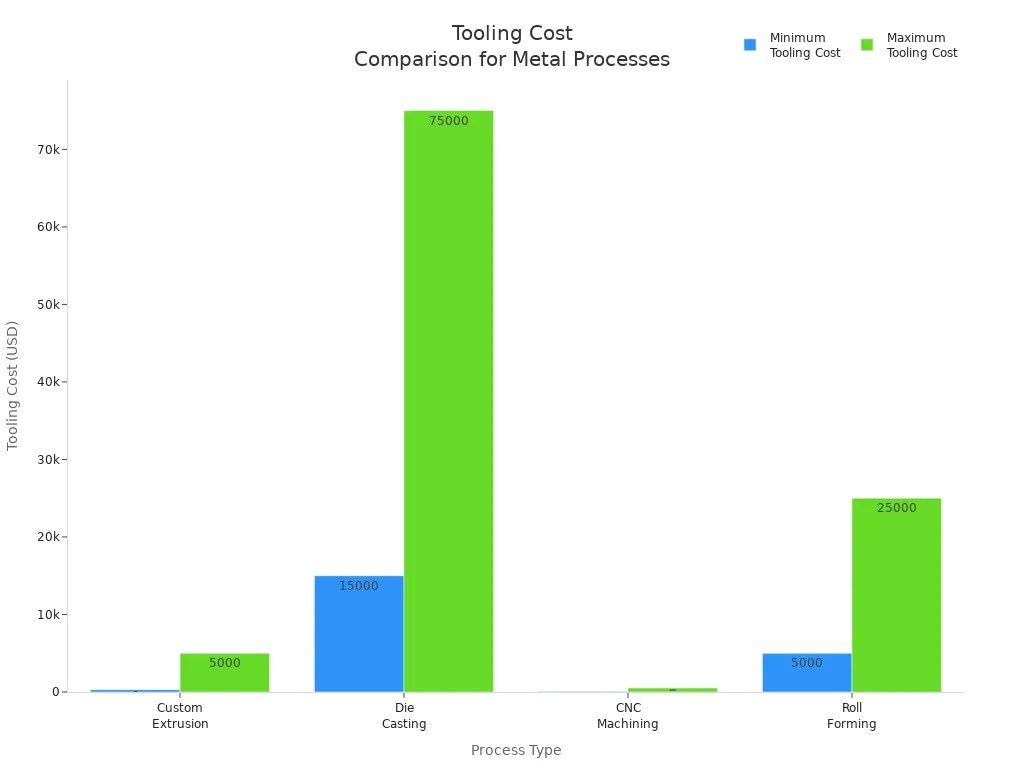
Custom dies and tooling are essential for creating unique aluminum profiles. The cost for a simple solid die usually ranges from $400 to $2,000, while complex hollow dies can reach $7,000 or more. Most projects fall between $1,250 and $1,950. These costs are much lower than those for casting or roll forming, which often exceed $15,000. For example, die casting tools can cost up to $75,000. As your production volume increases, the per-unit cost of the die drops, making custom extrusion a smart choice for medium to large runs.
|
Factor |
Custom Extrusion |
Die Casting |
CNC Machining |
Roll Forming |
|---|---|---|---|---|
|
Tooling Cost |
$300-$5,000 |
$15,000-$75,000+ |
$50-$500 |
$5,000-$25,000 |
Tip: Some suppliers may waive or refund die charges if you meet minimum order quantities.
Aluminum Material Prices
Aluminum prices play a major role in your project’s total cost. Material expenses can account for about 45% of your total sales revenue. Global demand, trade policies, and supply chain issues can cause prices to rise or fall quickly. For example, logistics disruptions and increased demand for sustainable materials have pushed prices higher in recent years. You should monitor market trends to make informed purchasing decisions and reduce manufacturing costs.
Labor and Production Costs
Labor and production costs for custom aluminum extrusions are usually stable and predictable. These costs depend on your region and the complexity of your profile. Direct labor for pressing or finishing can vary, and energy use often makes up about 25% of your total revenue. Producing a custom hollow profile by extrusion is much more affordable than machining the same part from solid billet. Operational efficiency and higher production volumes can help you control these costs and improve your bottom line.
-
Direct labor costs change with profile complexity.
-
Energy use scales with output.
-
Operational improvements can lead to significant savings.
How Custom Extrusions Reduce Manufacturing Costs
Material Efficiency
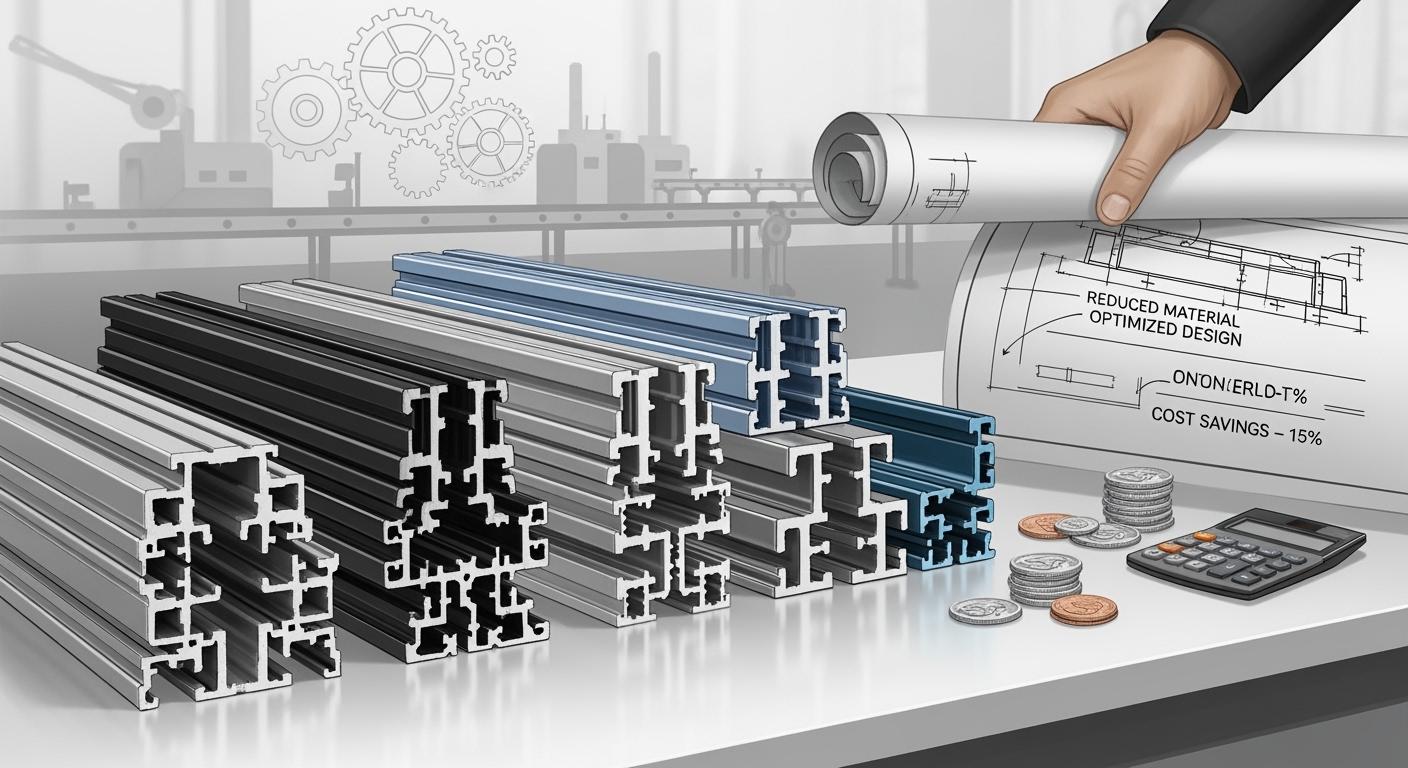
You can achieve significant material efficiency with custom aluminum extrusions. This process allows you to create profiles that match your exact requirements, which means you use only the material you need. By minimizing excess material, you lower raw material costs and generate less waste. This efficiency lets you reinvest savings into other parts of your business, boosting productivity and customer service. Streamlined production also reduces your reliance on outside vendors, which cuts transportation costs and overhead expenses. When you focus on material efficiency, you take a direct step to reduce manufacturing costs and improve your bottom line.
-
Custom extrusions allow complex shapes, which minimize the need for extra machining and tooling.
-
Using aluminum instead of stamped steel reduces weight, leading to lower shipping costs.
-
Less waste means fewer disposal fees and a smaller environmental footprint.
Simplified Part Design
Custom aluminum extrusions give you the flexibility to design parts that are easy to assemble and maintain. You can combine several features into one profile, which reduces the number of parts in your assembly. Fewer parts mean less time spent on assembly and fewer opportunities for errors. This approach helps you reduce manufacturing costs by cutting labor expenses and simplifying quality control.
"One of the best things you can do is to get your manufacturer involved early. Let the manufacturers who have been producing thousands of parts like yours look at your design and let them know how it’s going to be used, because they’re going to see something you don’t."
You can also save on tooling costs by simplifying your designs. For example, a complex hollow profile for a framing system might have a die cost of $2,800. By redesigning it into a four-slot hollow base with a snap-on rib cover, you could lower the tooling cost to $2,300. In another case, a complicated electronics enclosure became much more affordable when redesigned as a base channel and cover, cutting tooling investment by up to 50%.
-
Standardized extruded aluminum components make implementation easier.
-
Durable and modular aluminum framing reduces the need for frequent replacements.
-
Lighter parts lower shipping costs and improve safety during handling.
Multi-Function Profiles
You can design custom aluminum extrusions to perform multiple functions within a single profile. For example, you can include built-in hinges, screw bosses, or grooves. This integration reduces the number of separate components you need, which simplifies assembly and lowers production costs. When you combine several features into one part, you also reduce the need for secondary operations like welding or riveting.
-
Custom extrusions reduce assembly requirements by consolidating multiple components into a single profile.
-
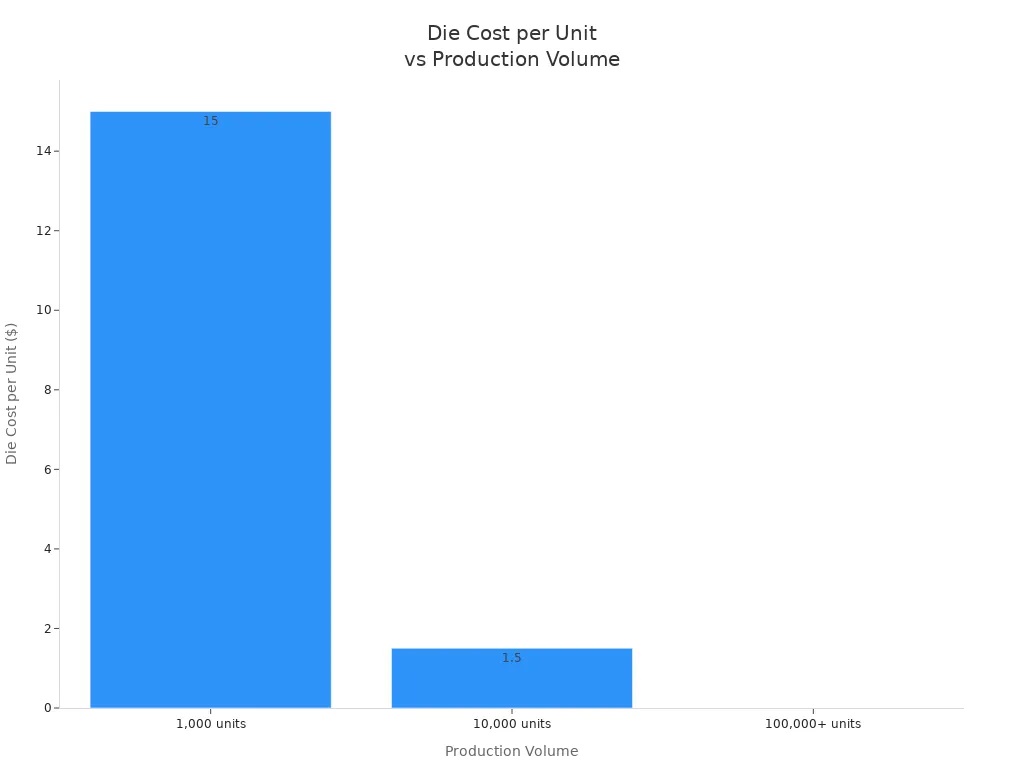
The initial die investment becomes less significant as production volume increases, leading to greater cost efficiency.
-
High-volume production allows you to spread fixed costs over more units, which maximizes savings.
|
Production Volume |
Die Cost per Unit |
Cost Implication |
|---|---|---|
|
1,000 units |
$10-20 |
Higher per unit cost due to initial investment |
|
10,000 units |
$1-2 |
Significantly lower per unit cost as die cost is amortized |
|
100,000+ units |
Negligible |
Minimal impact on overall cost, maximizing savings |
When you use multi-function profiles, you not only reduce manufacturing costs but also streamline your entire production process. This strategy helps you stay competitive and responsive to changing market demands.
Process Efficiencies and Best Practices
Just-in-Time Manufacturing
You can improve your manufacturing efficiency by adopting just-in-time (JIT) practices. JIT means you produce and deliver parts only when you need them. This approach helps you avoid excess inventory and reduces storage costs. You also lower the risk of holding outdated or unused materials. When you use custom aluminum extrusions, you can plan production runs to match your demand. This flexibility lets you respond quickly to changes in your schedule or market needs. JIT also helps you keep your cash flow healthy because you do not tie up money in large inventories.
Minimizing Scrap and Waste
Reducing scrap and waste is a key way to reduce manufacturing costs. Custom aluminum extrusion processes use precise techniques to create parts that closely match your final dimensions. This accuracy means you throw away less material. You also save on energy because you do not need to reprocess as much waste. When you cut down on waste, you lower your disposal fees and free up valuable floor space for productive work. Less clutter in your production area helps prevent bottlenecks and keeps your workflow smooth.
-
Precise extrusion creates less scrap.
-
Lower waste means reduced tipping fees and waste management costs.
-
Effective segregation systems can cut disposal costs by up to 40% in the first year.
-
More space and less clutter improve productivity.
Fast Lead Times
Fast lead times give you a competitive edge. Custom aluminum extrusion orders usually have die build times of 3 to 5 weeks. You can expect sample extrusions about two weeks after the die is ready. This timeline is faster than many other manufacturing methods, such as injection molding. Quick turnaround means you start production sooner and reduce inventory holding costs. You also gain flexibility to respond to market changes. When you work with experienced manufacturers, you can often match the speed of stock orders, which helps you reduce manufacturing costs and improve operational flexibility.
|
Best Practice |
Description |
|---|---|
|
Use Extrusion Over CNC Machining |
Extrusion is more cost-effective for uniform cross-section parts. |
|
Leverage Experienced Machine Shops |
Skilled shops ensure effective design and production. |
|
Optimize Material Usage |
Extrusion minimizes waste and saves money. |
|
Streamline Manufacturing Steps |
Fewer steps lower labor costs and reduce errors. |
Tip: Plan your orders around typical lead times to avoid rush charges and keep your costs low.
Practical Tips for Cost Reduction
Alloy Selection
You can choose the right aluminum alloy to maximize performance and minimize expenses. Each alloy offers unique benefits for manufacturing applications. The table below shows the most cost-effective alloys for extrusion:
|
Alloy |
Typical Applications |
Min. Wall Thickness |
Extrudability |
Surface Finish Quality |
|---|---|---|---|---|
|
6063-T6 |
Window frames, door systems, architectural trim |
0.040" (1.0mm) |
Excellent |
Excellent—ideal for anodizing |
|
6061-T6 |
Structural frames, aerospace fittings, automotive parts |
0.050"-0.062" (1.3-1.6mm) |
Good |
Good—moderate anodizing quality |
|
6005-T5 |
Rail car structures, truck frames |
0.045"-0.055" (1.1-1.4mm) |
Good |
Good—suitable for industrial use |
-
6063 gives you better formability for complex shapes and superior surface quality at a lower cost.
-
6061 provides higher strength and hardness, improved fatigue resistance, and versatility for demanding jobs.
-
6005 balances strength and manufacturability, making it ideal for transportation.
Selecting the right alloy helps you reduce manufacturing costs by matching material properties to your project needs.
Advanced Design Tools
You can use advanced design tools and software to optimize your extrusion profiles. CAD systems and feature-based neural networks help you minimize errors and avoid costly rework. Virtual prototyping lets you test designs before production, saving time and money. Predictive analysis of material flow and thermal behavior identifies potential issues early. Streamlined design iterations lead to faster project completion and lower development costs.
-
Simulation software reduces the need for physical prototypes.
-
Early detection of design flaws prevents expensive mistakes.
-
Faster design cycles keep your project on schedule.
Secondary Operations
You can minimize or eliminate secondary operations by designing your extrusions effectively. The table below shows strategies that help you save money:
|
Strategy |
Description |
|---|---|
|
Avoid Undercuts |
Features that require undercuts lead to costly secondary machining operations. |
|
Limit Machined Details |
Opt for post-extrusion finishes like anodizing or powder coating instead of milling complex patterns. |
|
Specify Finishes Only When Needed |
Use standard mill finishes for cost-effectiveness; reserve cosmetic finishes for essential aesthetic requirements. |
Tip: Work with your extrusion partner to identify which features can be integrated into the profile and which finishes are truly necessary.
You can reduce manufacturing costs by limiting unnecessary machining and focusing on efficient finishing methods.
You can reduce manufacturing costs by focusing on smart design, efficient processes, and careful material selection. Review your current extrusion profiles and look for ways to combine features or minimize waste. Consult with extrusion experts to find new opportunities for savings.
Take action now to improve your production and stay competitive in the market.
-
Understand cost factors
-
Optimize your designs
-
Leverage process efficiencies
FAQ
What is the minimum order quantity for custom aluminum extrusions?
You can often start with as few as 500 to 1,000 pounds of material. Some suppliers offer lower minimums for prototypes or small runs. Always check with your extrusion partner for their specific requirements.
How do custom extrusions compare to standard profiles in cost?
Custom extrusions may have higher upfront die costs. You save money over time by reducing assembly steps, material waste, and secondary operations. For large production runs, custom profiles often cost less per unit than using multiple standard parts.
Can you recycle scrap from aluminum extrusion?
Yes, you can recycle almost all aluminum scrap from extrusion. Recycling aluminum saves energy and reduces raw material costs. Many manufacturers collect and reuse scrap directly in their production process.
What design features help reduce extrusion costs?
You can lower costs by:
-
Using uniform wall thickness
-
Avoiding deep channels or undercuts
-
Limiting sharp corners
Tip: Simple shapes extrude faster and require less finishing, which saves you money.
 IPv6 network supported